

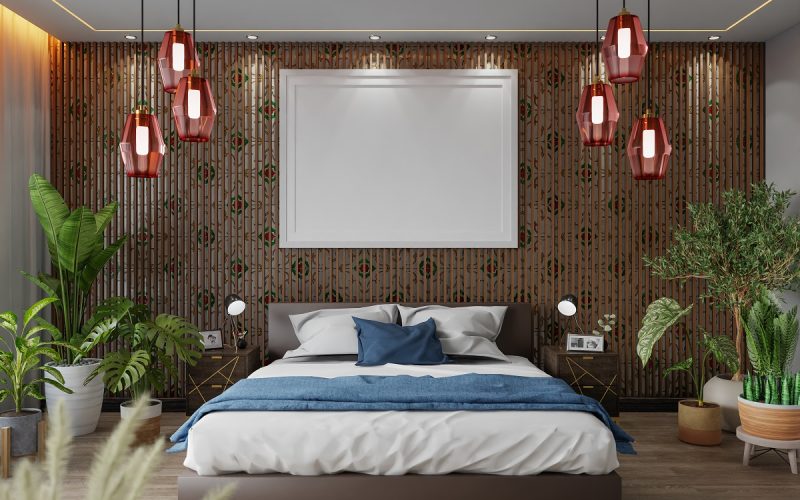
Looking to improve your sleep and create a soothing atmosphere? A mindful bedroom setup can make all the difference. Research shows that a well-designed space supports better sleep and relaxation.
Start with comfortable furniture and calming colors like blue or green. Decor that promotes tranquility can enhance the ambiance, while a clutter-free environment helps create a sense of calm. Use soft lighting or blackout curtains for the right mood. Keep noise and tech distractions to a minimum for a more peaceful space.
Your bedroom should be more than just stylish—it should also contribute to your well-being. Small changes can have a significant impact. Transform your room into a sanctuary for rest and relaxation.
Science of Sleep and Design
A carefully arranged bedroom can make a big difference in the quality of your sleep. Maintaining a temperature around 65°F (18.3°C) helps the body relax, while fresh air from an open window can improve comfort.
 A good mattress is important for reducing stress and supporting back health. The placement of your bed can also influence the room’s atmosphere, so aim for an arrangement that promotes calmness.
Limiting exposure to bright lighting, especially from screens, helps signal the brain to wind down. Research reveals that 71% of people believe a thoughtfully designed bedroom improves sleep quality. If you exercise, try to finish your workout at least three hours before bedtime.
To create an ideal sleep space, focus on cool temperatures, fresh air, a supportive mattress, and a calming design.
Furniture and Layout Tips
Designing a restful bedroom starts with thoughtful furniture and layout choices.
- Upgrade Your Mattress: A quality mattress can improve both sleep and overall health. If yours is over seven years old or causing discomfort, it’s time for a replacement.
- Organize and Plan Ahead: Keeping the room clean and organized reduces stress and simplifies nighttime routines. If you’re planning a decor update, remember that new furniture or decor can take 8-12 weeks to arrive.
- Consider Furniture Placement: Arrange furniture to allow a clear view of the door without being directly in line with it for a more restful feel. Adding a rug can enhance comfort and reduce noise, while soft lighting creates a cozy ambiance.
Color and Light Strategies
 The right color and lighting choices play an important role in creating a relaxing bedroom. Soft shades like light blue, pale green, or neutral tones help establish a calming mood. Walls painted in soothing colors and bedding in similar tones can further enhance relaxation.
Morning sunlight is a natural mood booster, so open your curtains to let in natural light. In the evening, blackout curtains block unwanted light, and amber glasses can help filter out blue light from screens. Scents like lavender can also promote relaxation.
Keeping your bedroom at 60-67°F (15-19°C) and incorporating furniture with soft, rounded edges contribute to a serene atmosphere.
Decor Elements for Relaxation
Your bedroom can become a calming retreat with the right decor.
- Soft Furnishings: Plush rugs, curtains, and bedding add a luxurious and comfortable feel.
- Morning Light: Let in natural sunlight to boost serotonin and improve your mood.
- Cozy Seating: Include a comfortable chair and a soft blanket for reading or unwinding.
- Ambient Lighting: Use warm table lamps or wall lights for a soothing glow.
- Quality Sleep: Invest in a supportive mattress to enhance your rest.
- Nature-Inspired Touches: Add greenery, balcony seating, or plants to create a peaceful vibe.
- Color and Texture: Neutral colors and soft textures provide a cozy, welcoming feel.
Clutter-Free and Sensory-Friendly Design
A clean and organized bedroom can also be a calming space for kids with autism. Keeping the room free of clutter helps reduce stress and promotes relaxation. Functional furniture simplifies the environment, making it more approachable.
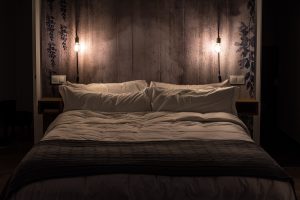 For color choices, softer tones like light blues, greens, or pastels work well to avoid overstimulation. Subtle patterns are preferable over bold designs for a serene atmosphere. Lighting is also an important factor. Warm lamps that mimic the soft glow of a sunset reduce overstimulation, while breathable, lightweight bedding ensures comfort throughout the night.
Making the bedroom a tech-free zone an hour before bed allows the brain to prepare for rest. A consistent bedtime routine can add structure and comfort, whether at home or traveling.
Ready for Better Sleep?
A peaceful retreat can be achieved with a few thoughtful updates. Calming colors, soft lighting, and simple decor can turn your bedroom into a restful haven. Adding cozy textures, natural elements, and functional furniture can elevate the ambiance while fostering relaxation.
Decluttering enhances the sense of calm and relaxation, making the space more inviting. Incorporating soft scents like lavender and maintaining an ideal temperature further improves comfort.
For more tips and insights on creating a serene and relaxing home environment, visit Green Nest News and explore our latest articles.
